
Custom Tattoo Design Guide: How Does the Process Work?

Updated: Oct 11
Short Answer: A custom tattoo design is artwork drawn from scratch for one person and never repeated. The process runs from a first conversation through references, sketches and revisions to the final piece. Most designs take a few days to a few weeks. Size, detail and the clarity of your idea set the pace.
TL; DR – Key Takeaways
A custom tattoo design is made for you alone, never reused.
Timelines range from a few days to several weeks, never fixed.
Size, detail, references and revisions really move the schedule.
Good references and a clear meaning speed everything up.
The process runs consultation, sketch, revisions, final design, appointment.
In this guide:
What is a Custom Tattoo Design?
A custom tattoo design is original artwork created for one client, based on their story and body. Nothing is copied and nothing is applied twice.
Ready-made or flash designs work differently. They are pre-drawn, available to anyone and priced lower, because the work exists already. Customized tattoo designs cost more artist time, which is why they fit only you.
How Long Does a Custom Tattoo Design Take on Average?
There is no single answer, but most projects fall into predictable ranges. Tattoo design time depends far more on complexity than on the calendar.
Project type | Placement | Typical design time |
Small, clear idea with strong references | Wrist or ankle | 2–5 days |
Medium piece, partly open concept | Upper arm or calf | 1–2 weeks |
Large or highly detailed composition | Back or thigh | 2–4 weeks |
Sleeve or multi-session project | Full arm or leg | 3–6 weeks |
Treat these as ranges rather than promises, since every project moves at its own pace. An artist who quotes an exact day before seeing references is guessing.
What Factors Affect Tattoo Design Time?
Several variables decide whether your custom tattoo design takes days or weeks. Some sit with the artist, others sit entirely with you, and most can be influenced. Understanding them helps you plan realistically instead of waiting anxiously. The five factors below explain where the time actually goes, and what you can change.
Creating the Design Completely From Scratch
Starting from a blank page always takes longest. The artist researches the subject, tests compositions and finds a form that suits your body. This is where a unique custom tattoo design earns its name. Expect more time here than for any adaptation of an existing idea.
Clarity of Reference Images
References shorten the process more than anything else. Clear photos show the artist your taste, level of detail and preferred mood immediately. Vague or contradictory references force extra rounds of guessing. Even three well-chosen images can save a week of back-and-forth.
Size and Placement of the Tattoo
Larger pieces simply need more drawing hours. Placement matters just as much, because a design must follow the curve of your body. A forearm composition behaves differently from the same idea on a calf. Complex placements often need extra fitting before anything is finalized.
Level of Detail in the Design
Detail multiplies work in a way size alone does not. Fine linework, layered textures and dense shading each take real hours to plan. A minimal bird and a feathered, highly detailed one are not comparable projects. More detail also means more decisions before the drawing is right.
Number of Revisions
Every tattoo design revision resets part of the schedule. One or two rounds are normal and healthy, since they sharpen the result. Repeated changes of direction, though, restart the creative work from the beginning. Clear early feedback keeps the number of rounds low.
What Can You Do to Speed Up the Design Process?
You have more influence over the timeline than you think. Learning how to design your own custom tattoo is not the point; preparing well is. Here is what helps most:
Prepare 3–5 reference images that genuinely match your taste.
Explain the meaning behind the piece, not only the visual.
Decide the placement and rough size before the first sketch.
Give the artist creative space instead of a strict template.
Send feedback in one clear message rather than many small notes.
These steps sound small, yet together they often halve the timeline. If your idea is clear, you can book a tattoo appointment and start now.
How Does the Custom Tattoo Design Process Work?
Every custom tattoo design follows a consistent order with most artists. Knowing the steps in advance removes uncertainty and makes your own input far more useful. You also learn when to speak up and when to let the artist work. The six stages below show how a design actually comes together.
Initial Consultation
Everything begins with a conversation about what you want and why. The artist asks about the subject, placement, size and the story behind it. This is also when budget and rough timing are discussed openly. A good consultation prevents most misunderstandings later.
Evaluating Ideas and References
Next the artist studies your references and separates taste from instruction. Some images show a style you love; others show a subject you want. Sorting the two is what turns a mood board into a plan. Expect a few clarifying questions at this stage.
First Sketch
The first sketch translates the agreed concept into real composition. It usually shows structure, flow and placement rather than fine detail. Seeing it on paper often changes how you feel about size or angle. Treat it as a conversation, not a finished product.
Necessary Revisions
Revisions refine what the sketch revealed. You might ask for a different pose, more movement or a calmer background. Focused feedback here is worth more than long lists of small notes. One or two rounds are usually enough to land it.
Finalizing the Design
Once the direction is right, the artist completes the detailing. Line weights, shading depth and the final proportions are locked in now. Many artists prefer to show the finished design close to the appointment day. That keeps the work fresh and consistent with your skin.
Tattoo Appointment
The last stage is the session itself, where the design meets your body. A stencil is placed first so you can approve the exact position. Small adjustments are still possible before the first line. After that, the tattooing begins.
The Most Common Mistakes in the Tattoo Design Process
Most problems come from communication rather than drawing. The biggest mistake is asking for a copy of someone else's tattoo, which no serious custom tattoo designer will do. Bringing twenty contradictory references is as unhelpful, since it hides your real taste.
Two other habits cause delays. Changing the core concept after the sketch restarts the creative work entirely. Staying silent about budget also wastes time. Custom tattoo design prices depend on size and detail from the first sketch.
How Does Osman Ergin Create Custom Tattoo Designs?
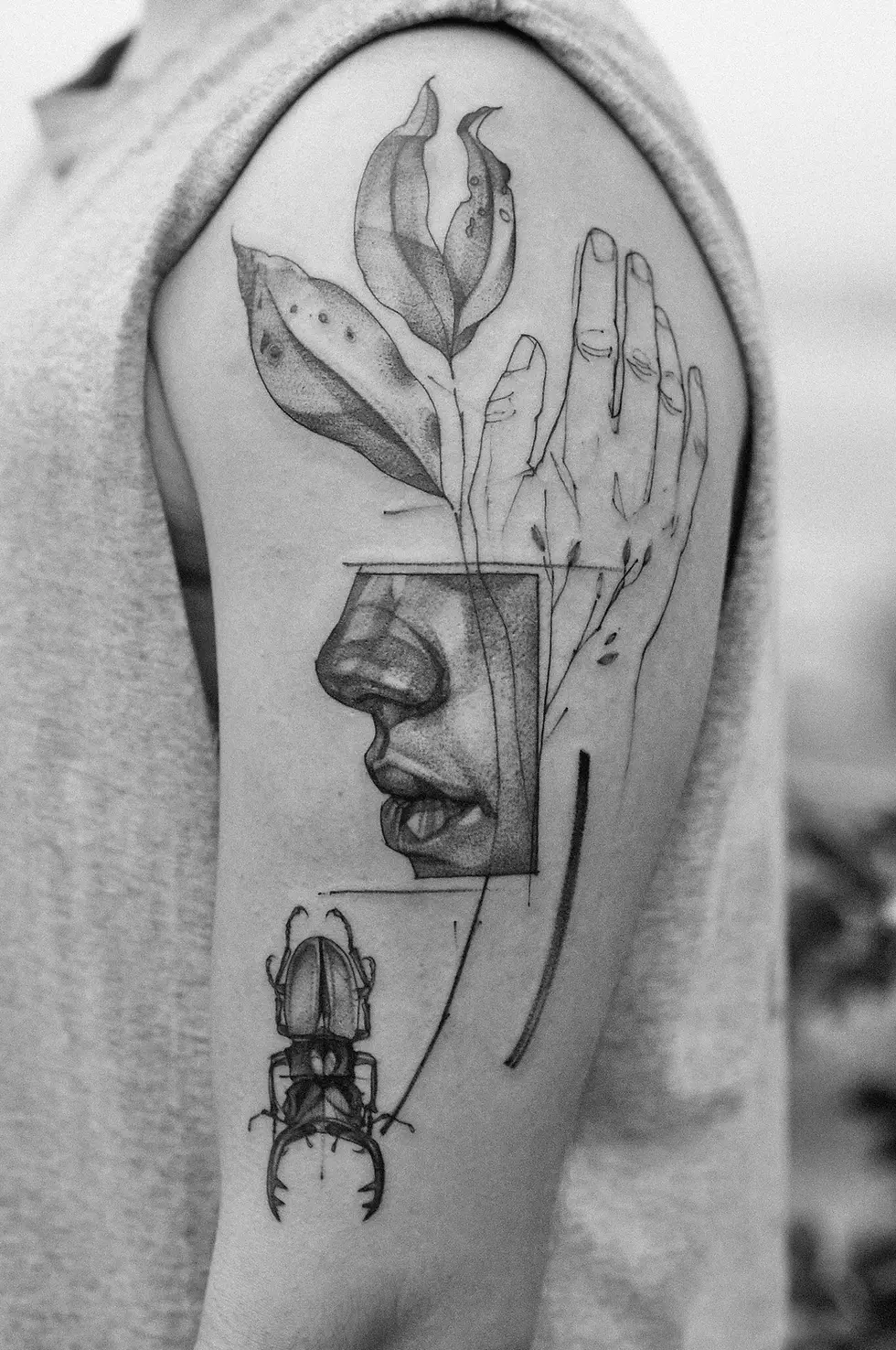
Osman works only with his own hand-drawn artwork, built around nature, birds and personal stories. Each piece is developed for one person, from first conversation to final line.
His custom tattoo design service starts with understanding the meaning behind your idea. From there he shapes a composition that suits your body and ages well. If that approach fits your idea, the appointment form is the place to begin.
Frequently Asked Questions
Why doesn't every custom design take the same amount of time?
Because complexity varies enormously. Size, detail, placement and reference quality all change the workload. A small clear idea and a full sleeve cannot share a schedule.
Can a design be prepared on the same day?
Rarely, and only for very small, simple pieces. Most artists need at least a few days to research, sketch and refine properly.
Is it necessary to send reference photos for a custom tattoo design?
Not strictly, but it helps a lot. References communicate taste faster than words and usually reduce the number of revision rounds.
Will my tattoo design be used on someone else?
No. A genuine custom piece is drawn for one client and not repeated on anyone else.
Is the design created digitally or drawn by hand?
Both are common, and many artists combine them. Osman's work is hand-drawn, which is what gives his linework its particular character.
Can a tattoo artist design something based only on an idea?
Yes, and many prefer it. A clear concept plus creative freedom often produces the most original result.
How many times can changes be made to the design?
One or two rounds are standard practice. Beyond that, repeated changes of direction usually mean the concept itself needs another conversation.
Is there an extra charge for a custom tattoo design?
Design work is normally included in the tattoo price rather than billed separately. Larger, more detailed projects cost more overall because they take more hours.


Comments