
Tattoo Pain Chart: Do Tattoos Hurt?

Updated: Jul 23
Tattoo pain is a normal part of the tattooing process because the needle penetrates the dermis repeatedly to implant pigment. If you are researching tattoo pain before booking an appointment, this guide explains the pain scale of tattoos, the most painful tattoo spots, the least painful areas to get a tattoo, and includes a detailed tattoo pain chart with a visual pain map structure.
Quick Answer
Yes, tattoos hurt because a tattoo machine inserts ink into the dermis layer using rapid needle motion. Tattoo pain level varies by body location, tissue thickness, and individual pain tolerance.
Most painful tattoo spots are typically ribs, spine, and feet, while least painful tattoo spots include the outer arm, thigh, and calf.
How Does Tattoo Pain Feel Like?
Tattoo pain feels like repeated scratching combined with heat or vibration. The sensation changes depending on whether the artist is lining, shading, or coloring.
Common descriptions of tattoo pain:
Sharp stinging during line work
Burning during shading
Vibrating pressure over muscle
Deep ache near bone
Pain perception increases slightly during long sessions due to localized inflammation. Most people describe tattoo pain as uncomfortable but tolerable rather than unbearable.
What Does the Level of Tattoo Pain Depend On?
Tattoo pain level depends primarily on anatomy and nervous system sensitivity. The pain scale of tattoos differs because each tattoo pain area has different nerve density and fat coverage.
Key factors influencing tattoo pain:
Nerve ending concentration
Skin thickness
Subcutaneous fat amount
Muscle mass
Distance to bone
Session duration
Stress level
Areas with minimal fat and high nerve density rank higher on a tattoo pain level chart. Muscle-dense regions with thicker tissue generally rank lower. Pain tolerance also varies between individuals due to genetics and psychological factors.
Tattoo Pain Chart
A tattoo pain chart organizes body areas into low, moderate, and high sensitivity zones based on commonly reported experiences. It provides a structured overview of how pain levels change across the body.
This chart is designed to answer two core questions clearly: where is the most painful place to get a tattoo and where is the least painful place to get a tattoo. By comparing anatomical regions side by side, users can visually understand how nerve density, skin thickness, and fat distribution affect how much it hurts.
The chart does not measure pain medically. Instead, it reflects collective feedback from tattoo clients and artists over time. Pain ratings are averages, not guarantees.
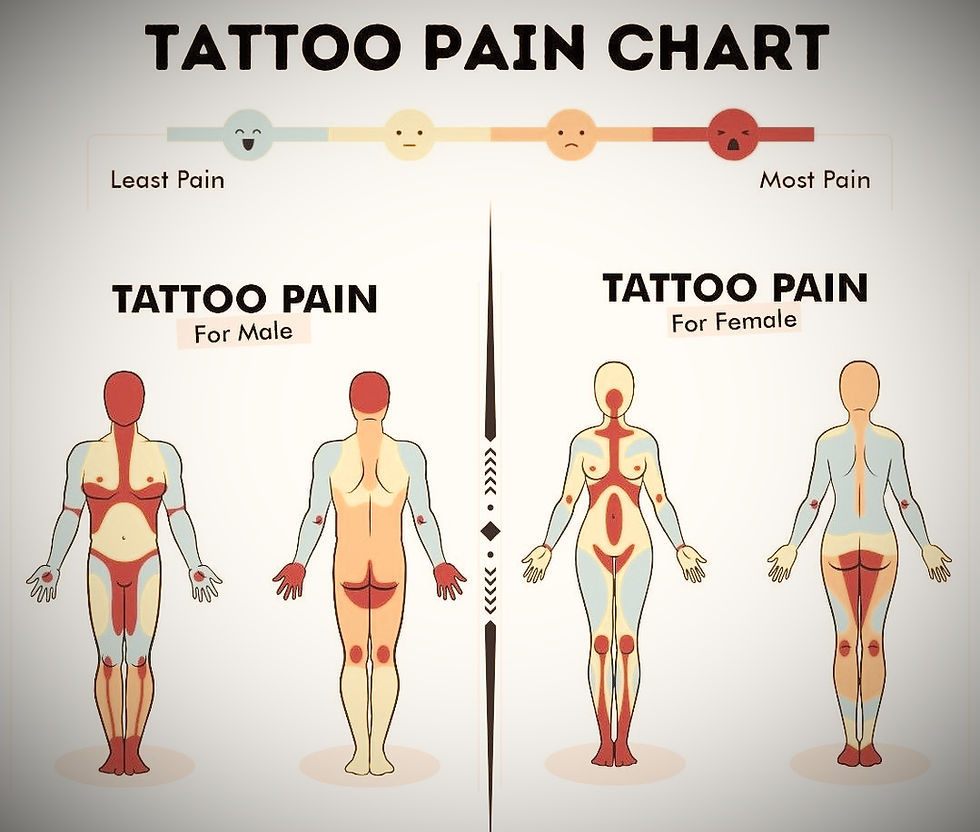
When reading a tattoo pain chart, keep these factors in mind:
Individual pain tolerance varies significantly
Larger designs may feel more intense than small tattoos
Linework and shading create different sensations
Long sessions increase sensitivity gradually
The goal is expectation management. It helps you choose placements based on realistic comfort levels rather than assumptions.
Most Painful Tattoo Spots
Most painful tattoo spots are areas where the skin is thin, nerve endings are dense, and fat cushioning is minimal. These regions typically rank highest because the needle operates close to bone.
High-sensitivity areas commonly include:
Ribs
Spine
Sternum
Feet
Ankles
Hands
Knees
Elbows
Armpits
These painful tattoo spots often produce sharper and more intense sensations compared to muscle-based areas. Movement also increases discomfort in zones like ribs and knees.
On the chart, these areas usually fall between 8 and 10. However, personal pain tolerance and session length can shift this range slightly.
Least Painful Tattoo Spots
Least painful tattoo spots are areas with thicker skin and more muscle or subcutaneous fat. These regions provide natural cushioning that reduces overall pain.
Common least painful areas to get a tattoo include:
Outer upper arm
Forearm
Thigh
Calf
Shoulder
Upper back (away from spine)
Least painful best place for a tattoo on a woman:
Thigh
Outer shoulder
Upper arm
Least painful best place for a tattoo on a man:
Outer bicep
Calf
Forearm
These least painful tattoo spots generally feel more like steady vibration or mild scratching. The sensation is more consistent and less sharp.
On most charts, these areas range between 3 and 5. They are often recommended for first-time clients seeking manageable discomfort.
How do you minimize tattoo pain?
Tattoo pain can be reduced through preparation and physical stability. Pain cannot be removed entirely, but it can be managed effectively.
Practical ways to minimize tattoo pain:
Sleep at least 7–8 hours
Eat a full meal beforehand
Stay hydrated
Avoid alcohol 24 hours before
Wear loose clothing
Use controlled breathing
Take short session breaks
Some artists allow topical anesthetic creams, though results vary. Calm breathing reduces sympathetic nervous system activation.
Once it's done, proper aftercare keeps it comfortable while it heals. Healing then follows a predictable path—see the tattoo healing process.
Just Keep Calm and Let’s Get You Inked
Tattoo pain is temporary, but choosing the right placement makes the experience far more comfortable. Reviewing a tattoo pain chart before your session helps you set realistic expectations and select areas that match your tolerance.
At Osman Ergin Tattoos, placement planning is part of the consultation process. Your skin type, design size, session length, and preferred tattoo pain areas are evaluated before starting. If you are ready to move from research to action:
Choose a placement aligned with your tattoo pain level
Discuss session timing and breaks in advance
Share any pain concerns during consultation
Plan hydration and rest before your appointment
A well-planned session reduces unnecessary discomfort and improves healing quality. Explore available designs and book your tattoo appointment through the Osman Ergin Tattoos page and take the next step with confidence.
FAQ
Will tattoo pain?
Yes, tattoo pain is expected because the needle penetrates the dermis repeatedly. Intensity depends on body placement and individual tolerance.
How painful is a tattoo on a scale of 1 to 10?
Most tattoos fall between 3 and 8 on the pain scale of tattoos. Ribs and spine may reach 9 or higher for some individuals.
Can I handle tattoo pain?
Most people can handle tattoo pain with preparation and mental focus. Sessions are adjustable, and artists can pause if needed.
Are hand tattoos painful?
Yes, hand tattoos are considered painful tattoo spots. Thin skin and high nerve density increase tattoo pain level.
How painful are back tattoos?
Back tattoos vary by location. Upper back areas are moderate, while spine tattoos are high on the tattoo pain level chart.
How painful are neck tattoos?
Neck tattoos are generally high on the pain scale of tattoos. The area has thin skin and limited cushioning.
How painful are spine tattoos?
Spine tattoos are among the most painful tattoo spots. Bone proximity increases sharp sensation.
How painful is a wrist tattoo?
Wrist tattoos are moderately painful. Thin skin and visible tendons raise sensitivity.
How to make a tattoo less painful?
To make a tattoo less painful:
Stay hydrated
Eat before the session
Avoid alcohol
Practice slow breathing
Choose least painful areas to get a tattoo
These steps stabilize physiological response.
How painful are chest tattoos?
Chest tattoos vary by placement. The sternum area ranks higher than the pectoral muscle region.
How painful is a forearm tattoo?
Forearm tattoos are among the least painful tattoo spots. Balanced muscle and moderate nerve density lower tattoo pain level.


Comments