
Can You Get a Tattoo Over a Scar?

In many cases yes, but the scar decides more than the design does. This guide is for anyone considering a tattoo over scar tissue for the first time. It covers which scars can be worked on, how long to wait, and what to ask first.
TL; DR – Key Takeaways
Most flat, mature scars can be tattooed; raised and keloid tissue is riskier.
Scar tissue usually needs at least a year before any tattoo over scar work.
Ink sits unevenly in scars, so scar tattoo results vary more than usual.
Textured, organic scar tattoo designs camouflage better than geometric or lettering work.
Ask a dermatologist before any scar tattoo you feel unsure about.
Does It Hurt to Get a Tattoo Over a Scar?
Often yes, and the sensation is usually different rather than simply worse. Scar tissue has altered nerve endings, so some patches feel numb and others feel sharp. Most people describe a tattoo over scar tissue as less predictable than normal skin.
The scar type matters a great deal. Thin, flat scars are frequently reported as comparable to ordinary skin. Raised or recently healed tissue tends to be more uncomfortable.
Location matters in the usual ways too. A scar tattoo on the ribs will feel different from one on the outer thigh. Tell your artist if the sensation changes partway through.
What Types of Scars Can Be Tattooed Over?
Flat, pale, fully matured scars are the most straightforward for a tattoo over scar. Surgical lines, old burns and faded stretch marks often fall into this group. Tattoos over scars of this kind are routine work in most studios.
Raised scars are more complicated. Hypertrophic scars sit above the skin but stay inside the original wound. They can sometimes take a scar tattoo, though the result is harder to predict.
Keloid tissue is the most cautious case. A keloid scar tattoo risks triggering further growth in skin already prone to it. Tattoos and keloid scars are generally treated as a combination to avoid without medical advice.
How Long Should You Wait Before Getting a Tattoo Over a Scar?
Most artists ask for at least twelve months, and many prefer longer. Scar tissue keeps changing colour, texture and height after it looks healed. Any tattoo over scar tissue done too early risks damaging skin that is still settling.
Stability is a better signal than age alone. The scar should be pale, flat and unchanged for several months. If it still itches, reddens or feels tight, it is not ready.
For surgical sites, follow your surgeon's guidance first. A surgery tattoo placed over a recent incision can interfere with healing. When unsure, wait another season and reassess.
What Should You Consider Before Getting a Tattoo Over Scars?
Preparation matters more here than with ordinary skin. The points below are worth settling before you book. Each one is simple, and skipping them is where most disappointment begins.
Work through them honestly rather than optimistically. An artist will raise the same questions at the consultation anyway.
The age and stability of the scar — at least a year, unchanged recently.
Your own healing history — a tendency to keloid changes everything.
The artist's experience — ask directly about their scar cover up tattoos.
Realistic expectations — concealment is usually partial, not total.
A patch test — some artists tattoo a small hidden area first.
Medical clearance — especially for burns, grafts and surgical sites.
Answering these turns a vague hope into a workable plan. If one of them stops you, that is the item to resolve before anything else.
What Are the Risks of Getting a Tattoo Over Scars?
The main risk is unpredictability rather than danger. Pigment sits unevenly in a scar tattoo, so colour can look patchy or blurred. A piece like this often needs two sessions where one would do elsewhere.
There is also a risk of irritating the tissue. Tattooing over scars can trigger renewed thickening in people prone to it. Keloid-prone skin carries by far the highest risk here.
Healing usually takes longer and feels less comfortable. Scarred areas have reduced blood supply in places, which slows recovery. Aftercare therefore needs more patience than a standard piece.
When Should You Avoid Getting a Tattoo Over Scars?
Avoid any tattoo over scar tissue while it is new, red or still changing. Fresh tissue is fragile, and the result will shift as it matures. This is the most common reason artists decline the work.
Active keloids are another clear case for caution. Tattooing over keloids can worsen the very thing you hoped to hide. A dermatologist should lead that decision rather than the studio.
Grafts, radiation-treated areas and numb patches also need medical input. The same applies if you take medication that affects healing. None of these is an automatic refusal, but all of them need checking.
What Should You Keep in Mind After Getting a Tattoo Over Scars?
Expect a slower and slightly less predictable heal. Scarred areas may stay tender or flake unevenly for longer than usual. Following aftercare instructions closely matters more with a scar tattoo than with ordinary skin.
Watch for anything beyond ordinary healing. Increasing hardness, spreading redness or renewed thickening should be reported quickly. Contact your artist first, and a doctor if it continues.
Plan for a touch-up rather than hoping to avoid one. A tattoo cover up on scars rarely settles perfectly at the first attempt. Most artists schedule a review a few months later.
Which Tattoo Styles Are Suitable for Camouflaging Scars?
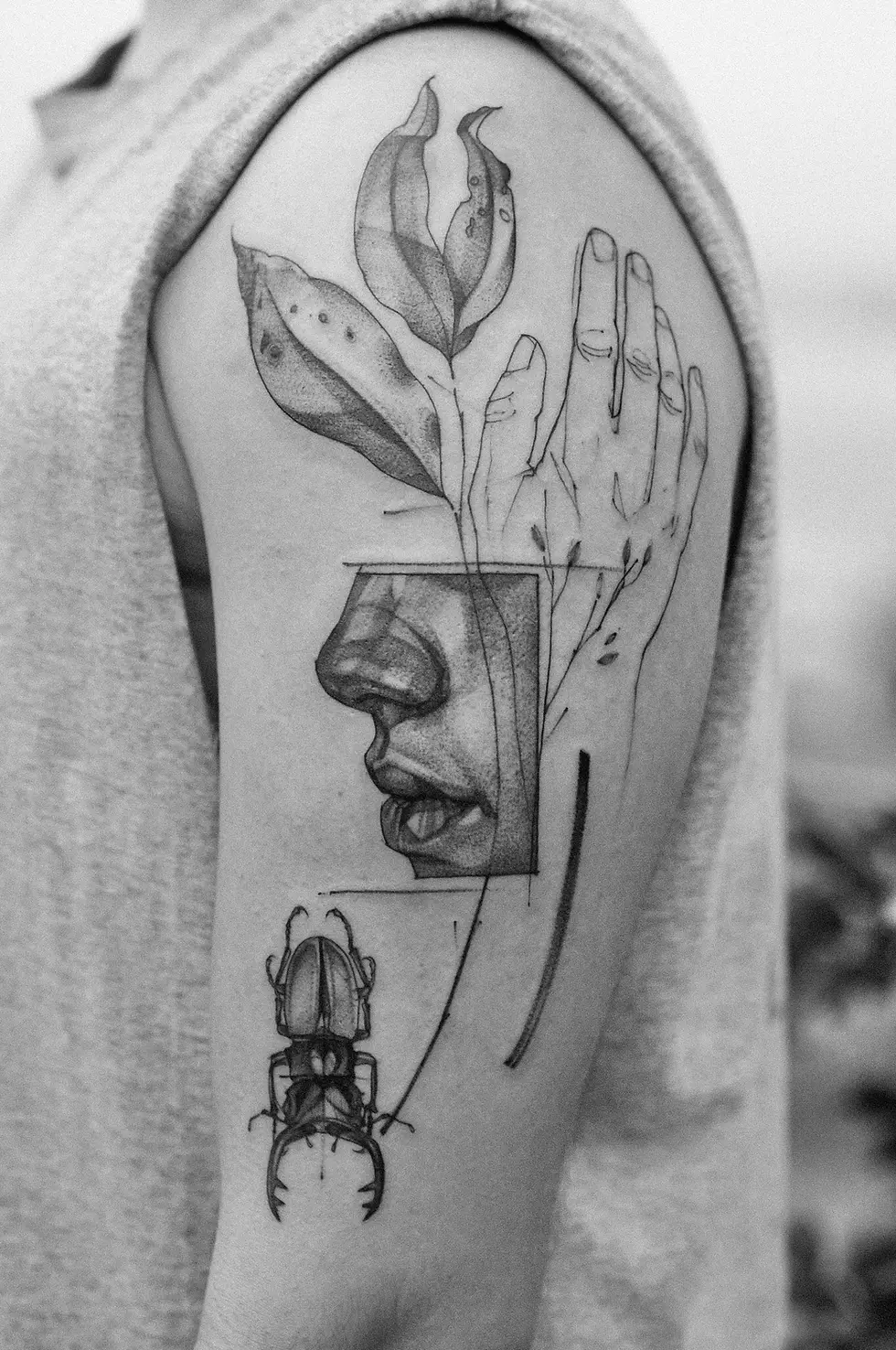
Textured, organic designs usually work best. Botanical work, feathers, waves, smoke and abstract shading break up a line without drawing the eye to it. Irregular edges hide irregular tissue, which is why scar tattoo designs lean organic.
Watercolour and dotwork are also worth discussing. Soft gradients disguise uneven absorption better than flat colour. Blackwork covers effectively, though it commits you to a large dark area.
Some styles tend to make the scar more obvious. Fine geometric patterns, straight lines, lettering and tight symmetry all reveal distortion. The eye expects regularity in them and notices exactly where it breaks.
These are suggestions rather than rules, and an experienced artist may make them work. Scar tattoo ideas are best developed together rather than chosen alone. Bring references, but let the design adapt once the artist sees the tissue.
Give Your Skin a New Look with Osman's Designs
A tattoo over scar tissue is a collaboration between what you want and what the skin allows. A good design works with the scar rather than against it. That is a conversation, not a catalogue choice.
Osman Ergin draws every piece by hand for one person and one placement. Bring photographs of the area, your references and any medical advice you have. A scar tattoo plan starts from there.

Frequently Asked Questions
Are tattoos good for covering scars?
Often, particularly for flat, mature tissue. Tattoos to cover scars usually reduce visibility rather than remove it. So can tattoos cover scars completely? Rarely, but the difference can still be striking.
Do scars reject tattoo ink?
Scars do not reject ink in the way that phrase suggests. They absorb it unevenly, which leaves patchy areas. A second pass usually improves consistency.
Can a tattoo completely cover a scar?
Rarely completely, though the change can be dramatic. Texture tends to remain visible even when colour matches well. Tattoos that cover scars work best when the design embraces that texture.
Does the level of pain vary depending on the type and location of the scar?
Yes, noticeably. Raised and recent scars are usually more sensitive than flat, old ones. Location follows the same patterns as any other tattoo.
Can you tattoo over keloid scars?
It is generally discouraged without medical advice. Keloid tissue can grow further in response to needling. Clinics offering cosmetic tattoo for scar concealment apply the same caution.
Can getting a tattoo over a scar make it worse?
It can, particularly with keloid-prone or immature tissue. Timing and a proper assessment are what prevent that outcome. An artist who declines tattoos for scar work is usually protecting the result.

Comments