
Tattoo Placement Guide: How to Choose the Right Spot?

Where a tattoo sits changes how it looks, how it heals and how long it stays sharp. This tattoo placement guide is for anyone deciding between two or three spots. It covers the factors that matter, the mistakes people repeat, and the tests you can run first.
TL; DR – Key Takeaways
Placement affects pain, healing and how well a design ages.
Size and detail should decide the area, not the other way round.
Skin that moves or stretches blurs fine detail faster.
Visibility is a practical decision as much as an aesthetic one.
Test a placement before committing to it permanently.
Why Does Tattoo Placement Matter So Much?
Tattoo placement matters because skin is not a flat, uniform canvas. It curves, stretches, folds and ages at different rates across the body. The same design can look sharp in one spot and muddy in another.
Placement also decides how a piece fits into your life. Some areas are easy to cover at work, and others never are. These are practical questions, and they are easier answered before the stencil goes on.
What Is the Rule for Tattoo Placement?
There is no single rule, but there is a reliable principle. Let the design decide the area, and let the body decide the size. Most tattoo placement rules people repeat are versions of that idea.
So how do you decide tattoo placement in practice? Start with the shape of the design and find a part of the body with the same shape. A long, narrow piece wants a long, narrow area.
Flat and stable areas hold detail best over time. Joints, hands and feet are the hardest places to keep crisp. None of this is a prohibition, but it is worth knowing before you choose.
6 Factors to Consider When Choosing a Tattoo Placement
Six factors do most of the work in this decision. Weigh them together rather than one at a time, because they interact. A spot that wins on comfort may lose on longevity.
Pain Tolerance
Pain varies by area more than by person. Places with thin skin over bone generally hurt more, and fleshier areas generally hurt less. Ribs, sternum, hands, feet and the inner arm are commonly reported as the sharpest.
Outer thigh, forearm and upper arm tend to sit at the gentler end. Our tattoo pain chart sets out the differences area by area. Use it as a guide, not as a prediction of your own experience.
Tattoo Size and Design Detail
Detail needs room, and that single fact settles many arguments. A design packed with fine lines will blur if it is shrunk too far. Deciding the size first usually narrows the shortlist of areas immediately.
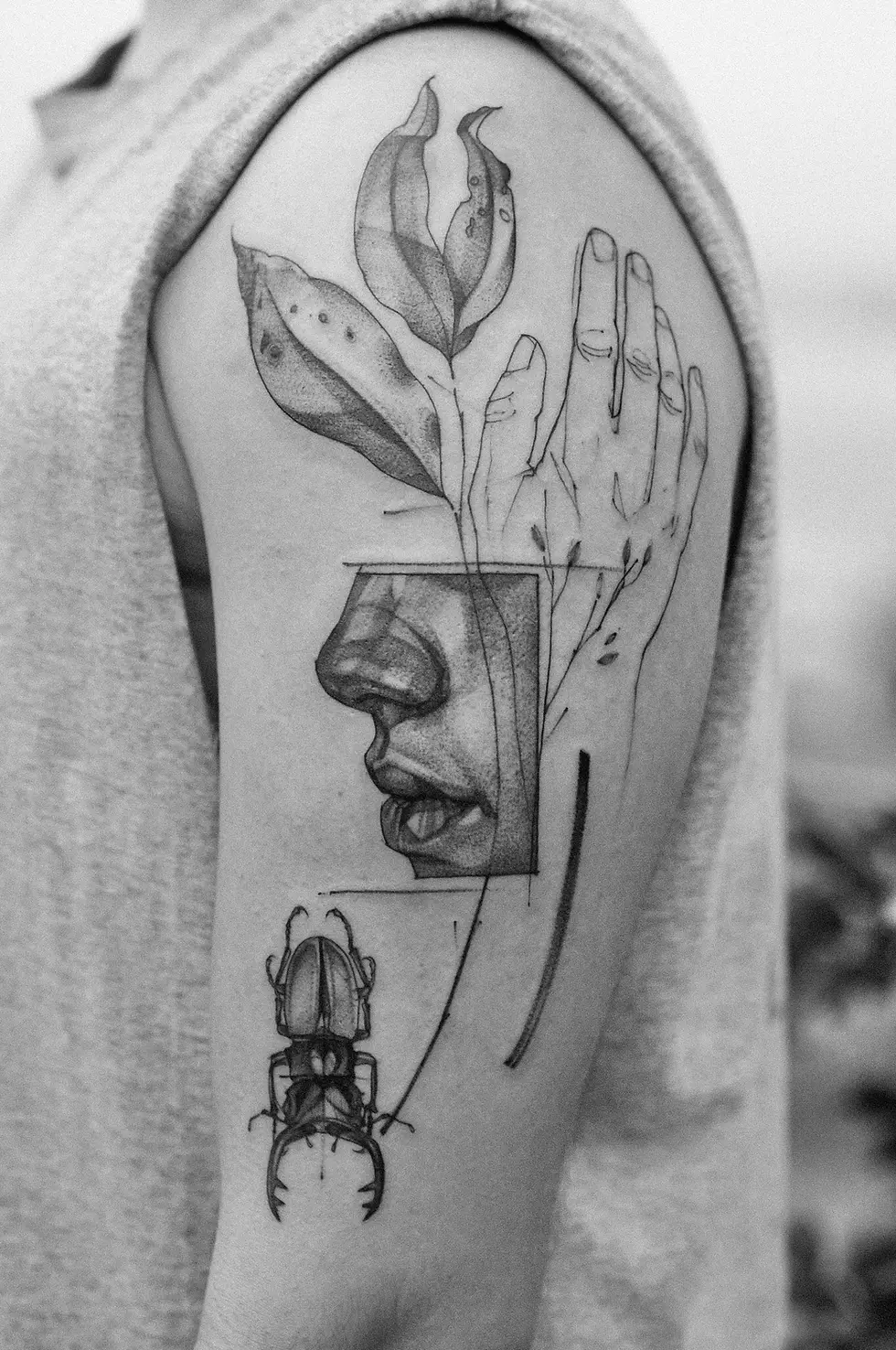
Small tattoo placement works best where the skin is flat and stable. Larger work needs an area that can hold a full composition without wrapping awkwardly. The best placement for large tattoos is usually the back, thigh or outer arm.
Skin Type, Elasticity, and the Effects of Aging
Skin changes over decades, and placement determines how visible that change becomes. Areas that stretch, such as the stomach and inner upper arm, show it most. Fine detail placed there softens sooner.
Elasticity also varies between people and across the body. Sun exposure accelerates the process considerably, which is one driver of a fading tattoo. Choosing a stable area is the simplest form of long-term protection.
Healing Process and Everyday Convenience
Some areas are simply easier to look after. A forearm can be kept clean and uncovered without much thought. Feet, hands and anywhere under a waistband demand far more attention.
Think about the two weeks after the session, not just the day itself. Clothing, sleep position and exercise all interact with the tattoo healing process. An awkward spot during a busy fortnight is worth postponing.
The Meaning and Personal Significance of the Tattoo
Some people want a piece where they can see it daily. Others prefer something private, visible only to them. Both are valid, and neither is more serious than the other.
There is no fixed tattoo placement meaning by body part, despite what some lists claim. What matters is whether the spot suits how you want to carry the design. That question is personal rather than symbolic.
Tattoo Visibility
Visibility is often the deciding factor in the end. Think about work, family and how you want to introduce the piece. A hidden tattoo placement gives you the choice rather than removing it.
Hands, neck and face remain the most restrictive areas in many professions. Tattoo placement for professional jobs usually favours the upper arm, back, thigh or ribs. These areas disappear completely under normal clothing.
Choosing the Right Placement Based on Your Design
Different design types behave differently on the body. A tattoo placement chart like the one below matches common styles to the areas that suit them. Treat it as a starting shortlist rather than a verdict.
Design type | Usually suits | Why |
Minimalist, single line | Wrist, ankle, collarbone, behind the ear | Small, flat, stable areas keep thin lines crisp |
Large and detailed | Back, thigh, outer arm | Space for full composition without wrapping |
Typographic or script | Forearm, ribs, collarbone, spine | Straight runs keep letterforms readable |
Symmetrical | Chest, upper back, spine | The body's own symmetry supports the design |
Colour-heavy | Outer arm, thigh, shoulder | Less sun exposure and friction than hands or feet |
Fine-line botanical | Forearm, shoulder, outer calf | Gentle curves without heavy stretching |
Wrap-around | Upper arm, thigh, ankle | Round areas carry a continuous line naturally |
The best placement for minimalist tattoos is almost always a flat, low-movement area. The best placement for script tattoos follows the same logic, with an added need for a straight run. If you are weighing two options, this is a good point to ask your artist directly.
Best Placements for First-Time Tattoo Seekers
For a first tattoo, choose comfort over ambition. The outer forearm, upper arm and outer thigh are the usual recommendations. They are moderate for pain, straightforward to heal and easy to keep clean.
A first tattoo placement should also be easy to live with. Something coverable gives you room to adjust to having it. Many people choose a more exposed spot for their second piece instead.
The best tattoo placement for a first session is the one you will not have to think about daily. Comfort during healing shapes the whole experience. There is no prize for starting with the ribs.
Popular Tattoo Placements for Women and Men
Popular choices differ by preference rather than by rule. Any area suits anyone, and the patterns below are simply what studios see most often. Tattoo placement ideas are worth gathering widely before narrowing down.
Common tattoo placement for women includes the forearm, upper back, ribs, ankle and behind the ear. These areas suit both small pieces and flowing designs. Spine and shoulder work well for anything vertical.
Common tattoo placement for men includes the upper arm, chest, calf and back. Arm tattoo placement remains the single most requested across both groups. Leg tattoo placements have grown steadily, particularly for larger pieces.
Beyond these, the most requested tattoo spots on the body stay fairly constant year to year. Collecting tattoo position ideas from several sources helps you see what actually suits your proportions. These areas stay popular for practical reasons, not just fashion.
Common Mistakes When Choosing a Tattoo Placement
Most regrets trace back to a handful of avoidable decisions. These are the tattoo placement mistakes that come up repeatedly in consultations. Almost all of them are decided before the stencil goes on.
Each one is easy to avoid once you know to look for it. None requires expert knowledge, only a pause before committing.
Forgetting that skin ages. Stomach, inner arm and chest change more than a forearm does.
Choosing by trend. A placement that is everywhere this year may not suit your body at all.
Ignoring your job. Hands, neck and face stay restrictive in many professions.
Squeezing a design into a small spot. Detail disappears when scale is forced.
Picking a painful area for a first piece. Discomfort can cut a session short.
Not considering your other tattoos. New work has to sit beside what is already there.
Deciding on the day. Rushed placement choices are the ones people revisit later.
Avoiding these removes most of the risk from the decision. If you are unsure between two areas, that uncertainty is a reason to wait rather than guess.
Most Common Consequences of Poor Tattoo Placement
A poorly chosen area shows itself over months rather than days. Fine detail blurs, lines spread and the design loses its original balance. None of this reflects the quality of the work itself.
Healing can also be slower and less predictable in high-movement areas. Friction from clothing or repeated bending disturbs a settling tattoo. That sometimes leads to patchy ink and the need for a touch-up.
The practical consequences matter too. A piece that cannot be covered at work becomes a daily negotiation. Cover-ups and corrections are possible, but they are always harder than choosing well initially.
Practical Tests to Try Before Making a Decision
You can test a placement before committing to it permanently. These checks cost nothing and take a few days at most. They answer questions that imagination cannot.
Print the design at its real size and tape it to the area. Wear it for two or three days and watch how it behaves. A temporary or henna version gives you an even better sense of how it reads.
Photograph the spot from several angles and in different clothing. Learning how to plan tattoo placement this way removes most of the guesswork. Finally, book a consultation, because an artist will spot proportion issues you cannot.

Frequently Asked Questions
What is the best placement for a first tattoo?
The outer forearm, upper arm and outer thigh are the usual recommendations. They are moderate for pain and simple to heal. All three are also easy to cover.
Which areas are safer for tattoos if you have a professional career?
Upper arm, back, thigh and ribs disappear under normal work clothing. Hands, neck and face remain the most restrictive. Consider your industry rather than general advice.
Where is the best placement for tattoos?
There is no universal answer, only the best fit for a given design. Flat, stable, low-friction areas hold detail longest. Match the shape of the design to the shape of the area.
What does tattoo placement say about you?
Less than most articles suggest. Placement usually reflects practical choices about visibility and comfort. Any meaning attached to it is personal rather than universal.
Where not to put a tattoo?
Hands, feet, fingers and areas over joints are the hardest to keep sharp. They see constant friction and movement. They are not forbidden, but they do need realistic expectations.
Which tattoo placements are easy to hide?
Upper arm, back, chest, thigh and ribs are covered by most clothing. Upper thigh is among the easiest of all. Each still needs loose clothing while healing.
Which areas take the longest to heal after a tattoo?
Hands, feet, elbows, knees and anywhere under a waistband generally take longest. Movement and friction slow the process. Follow aftercare advice closely in these spots.

Comments